Annamaria Luongo
Blog

Measured before it is shown.

Analyses built on Copernicus data, each around one question: how warm a summer was, how rare a heatwave, how many people it reached.

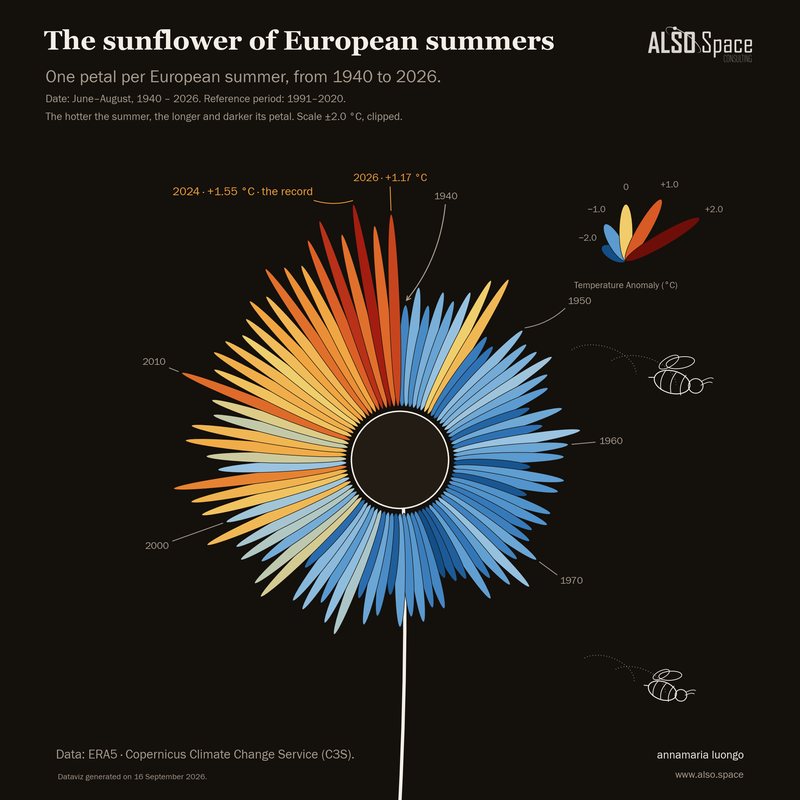
The sunflower of European summers: one petal for each summer from 1940 to 2026, longer and darker when the summer was warmer than the 1991–2020 average
Every European summer since 1940, one petal each

Nine of the ten warmest European summers on record came in 2010 or later. The summer of 2026 was the third warmest, and nearly half of its heat came in June.
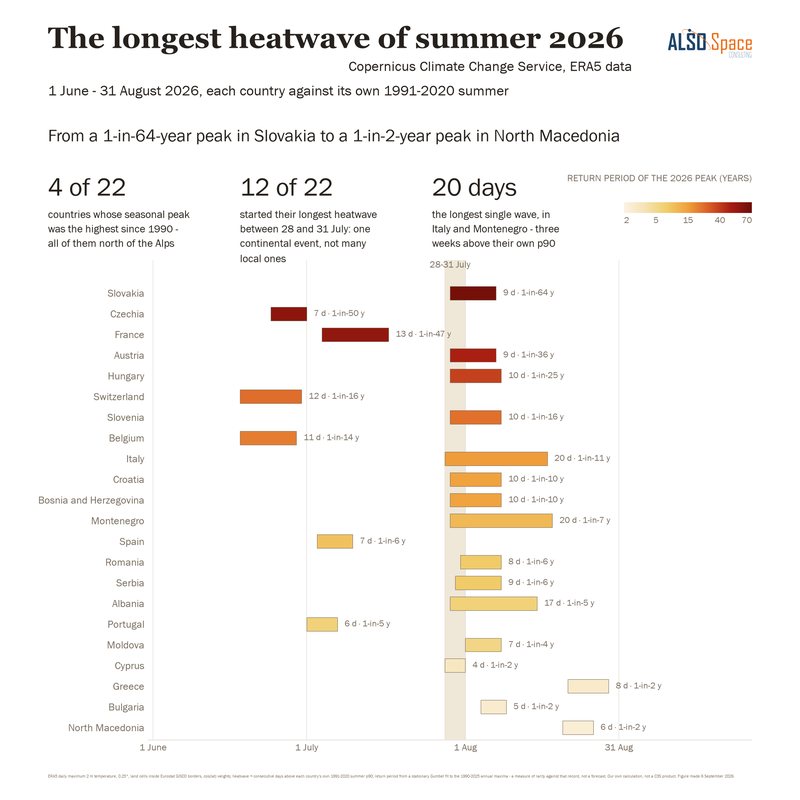
The longest heatwave of summer 2026 in 22 European countries, one bar per country along the summer, coloured by the return period of its peak
The rarest heat peaks of summer 2026 were in central Europe and France

Slovakia, Czechia, France, and Austria set their highest summer peak since 1990. Further south, the heat lasted longer, and between 28 and 31 July, 12 of the 22 countries entered their longest heatwave.
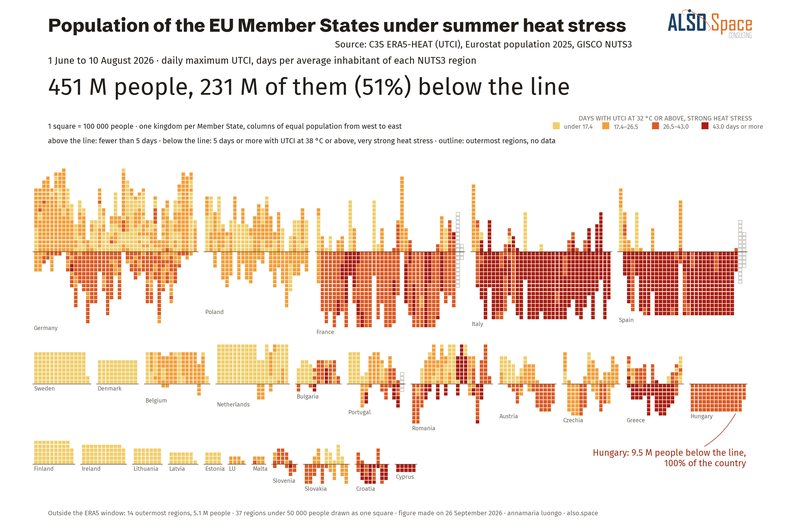
Population of the EU Member States under summer heat stress, 1 June to 10 August 2026: one square for every 100,000 people, below the line those living in regions which averaged five days or more of very strong heat stress
On 27 June 2026, 383 million people in the EU were under strong heat stress

Counted in people, the summer of 2026 affected almost every resident of the European Union, and it was most unusual where heat is least familiar.
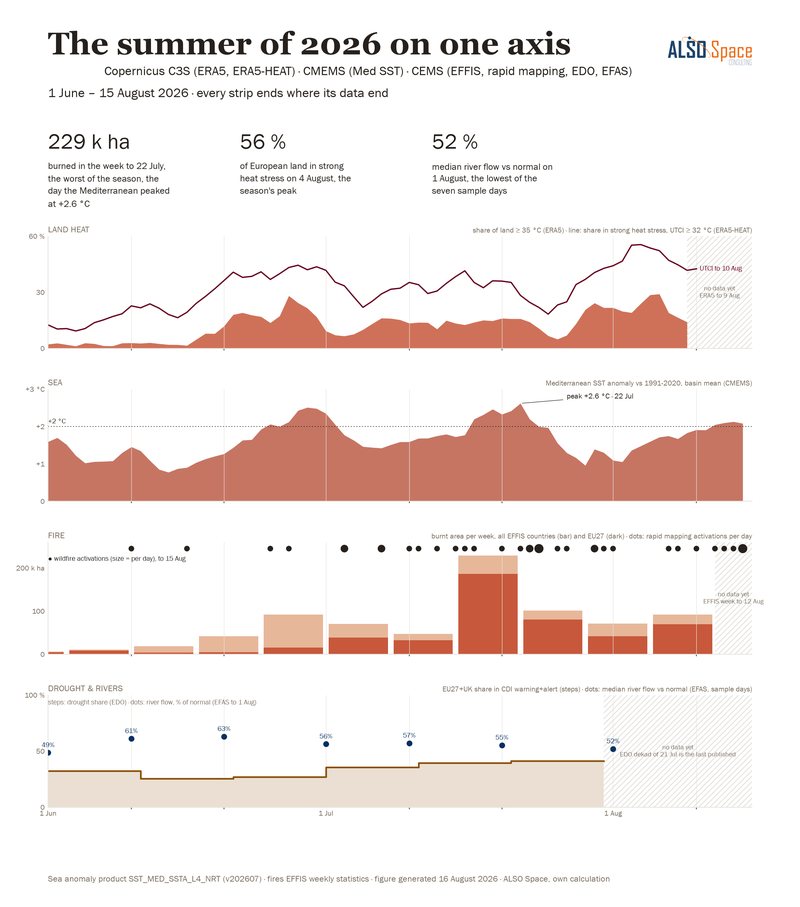
The summer of 2026 on one axis: share of land in extreme heat between 34° and 55.5° N and between 10° W and 35° E, Mediterranean Sea surface temperature anomaly, weekly burnt area, and share of land in drought, from 1 June to 15 August 2026
In summer 2026, fire followed the heat, not the drought

Across Europe, the fires of June and July went with the number of hot days and not with dry soils. France was the only country in which heat, drought, low rivers, and fire all came close to their records at the same time.